Ответ на вопрос
Melophorus
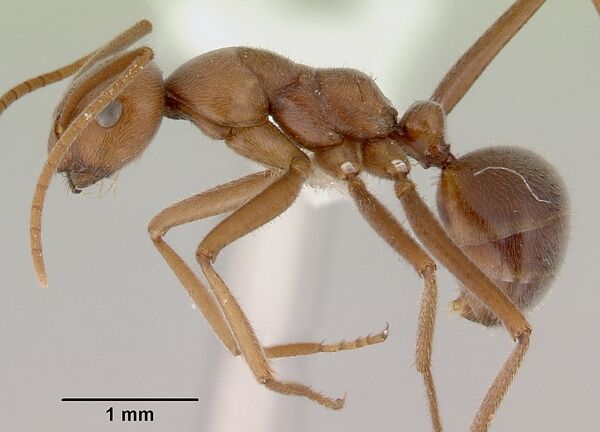
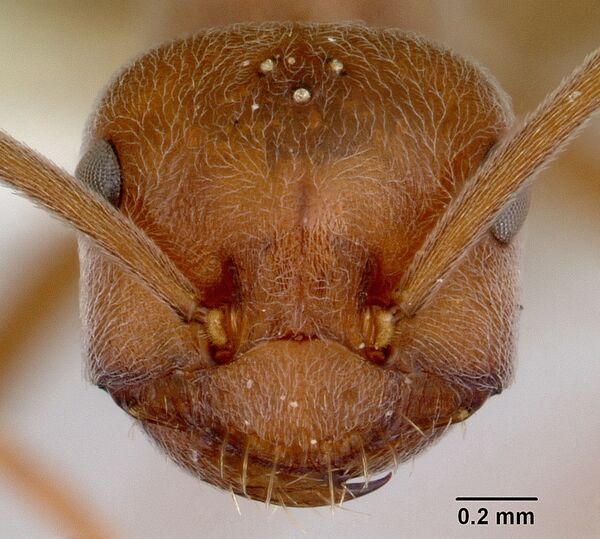
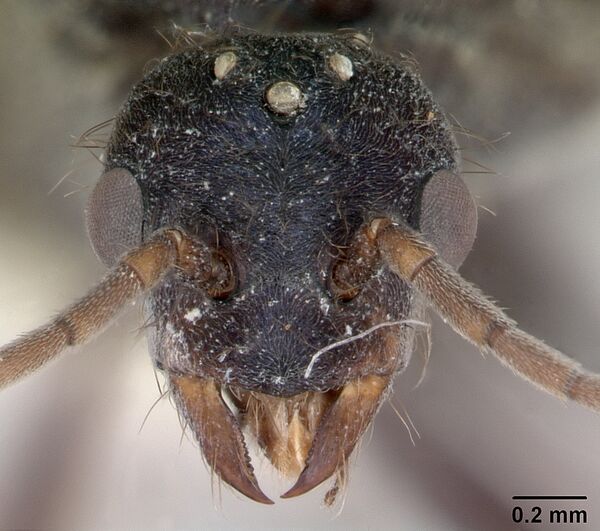
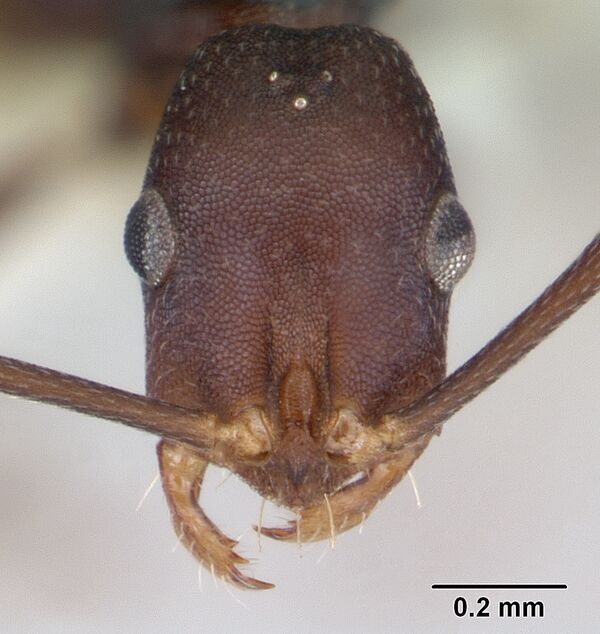
Melophorus (лат.) — род муравьёв трибы Melophorini из подсемейства Formicinae (Formicidae). Эндемики Австралии.




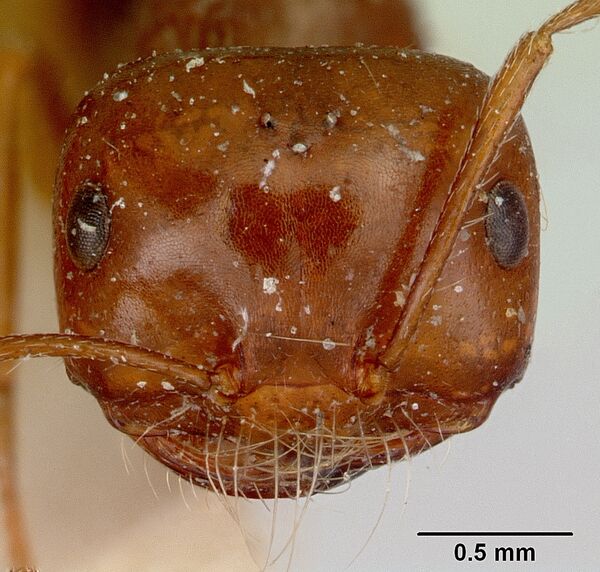
Общие сведения
| Melophorus | |
|---|---|
| Научная классификация | |
|
Домен: Царство: Подцарство: Без ранга: Без ранга: Без ранга: Без ранга: Тип: Подтип: Надкласс: Класс: Подкласс: Инфракласс: Надотряд: Hymenopterida Отряд: Подотряд: Инфраотряд: Надсемейство: Семейство: Подсемейство: Триба: Melophorini Forel, 1912 Род: Melophorus |
|
| Международное научное название | |
| Melophorus Lubbock, 1883 |
Распространение
Описание
Обитатели пустынных и полупустынных территорий, напоминают своей дневной активностью, быстротой бега и стойкостью к жаре муравьёв-бегунков рода Cataglyphis (триба Formicini) Африки и Евразии. Экстремально термофильный вид Melophorus bagoti (красный медовый муравей) продолжает фуражировать при температуре в 50—70 градусов[1][2]. Некоторые виды получили название медовых муравьёв, так как способны хранить запасы углеводов в расширенном брюшке специальной касты рабочих. Усики состоят из 12 члеников, нижнечелюстные щупики из 6, нижнегубные щупики из 4 члеников.
Обитают в полупустынях, саваннах и кустарниковых зарослях. Термофильные муравьи с дневной фуражировкой. В основном собирают мёртвых членистоногих. Среднее расстояние ухода от гнезда 26 м (в диапазоне от 2 до 64 м)[3].
Систематика
Более 90 видов, в том числе:[4]
- Melophorus aeneovirens Lowne, 1865
- Melophorus ankylochaetes Heterick, Castalanelli & Shattuck, 2017
- Melophorus anderseni Agosti, 1998[5]
- Melophorus andersenioides Heterick, Castalanelli & Shattuck, 2017[4]
- Melophorus argus Heterick, Castalanelli & Shattuck, 2017
- Melophorus attenuipes Heterick, Castalanelli & Shattuck, 2017[4]
- Melophorus bagoti Lubbock, 1883 — typus
- Melophorus barbellulatus Heterick, Castalanelli & Shattuck, 2017
- Melophorus biroi Forel, 1907
- = Melophorus marius Forel, 1910
- Melophorus brevignathus Heterick, Castalanelli & Shattuck, 2017
- Melophorus brevipalpus Heterick, Castalanelli & Shattuck, 2017
- Melophorus bruneus McAreavey, 1949
- Melophorus caeruleoviolaceus Heterick, Castalanelli & Shattuck, 2017
- Melophorus canus Heterick, Castalanelli & Shattuck, 2017
- Melophorus castaneus Heterick, Castalanelli & Shattuck, 2017
- Melophorus cerasinoniger Heterick, Castalanelli & Shattuck, 2017
- Melophorus chauliodon Heterick, Castalanelli & Shattuck, 2017
- Melophorus chrysus Heterick, Castalanelli & Shattuck, 2017
- Melophorus castanopus Heterick, Castalanelli & Shattuck, 2017
- Melophorus clypeatus Heterick, Castalanelli & Shattuck, 2017
- Melophorus compactus Heterick, Castalanelli & Shattuck, 2017
- Melophorus constans Santschi, 1928
- Melophorus cuneatus Heterick, Castalanelli & Shattuck, 2017
- Melophorus curtus Forel, 1902
- Melophorus dicyrtos Heterick, Castalanelli & Shattuck, 2017
- Melophorus diversus Heterick, Castalanelli & Shattuck, 2017
- Melophorus eumorphus Heterick, Castalanelli & Shattuck, 2017
- Melophorus fieldi Forel, 1910
- Melophorus fulgidus Heterick, Castalanelli & Shattuck, 2017
- Melophorus fulvidus Heterick, Castalanelli & Shattuck, 2017
- Melophorus fulvohirtus Clark, 1941
- Melophorus gibbosus Heterick, Castalanelli & Shattuck, 2017
- Melophorus gilliatensis Heterick, Castalanelli & Shattuck, 2017
- Melophorus gracilipes Heterick, Castalanelli & Shattuck, 2017
- Melophorus graciliceps Heterick, Castalanelli & Shattuck, 2017
- Melophorus gracilis Heterick, Castalanelli & Shattuck, 2017
- Melophorus griseus Heterick, Castalanelli & Shattuck, 2017
- Melophorus hexidens Heterick, Castalanelli & Shattuck, 2017
- Melophorus hirsutipes Heterick, Castalanelli & Shattuck, 2017
- Melophorus hirsutus Forel, 1902
- Melophorus incisus Heterick, Castalanelli & Shattuck, 2017
- Melophorus inconspicuus Heterick, Castalanelli & Shattuck, 2017
- Melophorus insularis Wheeler, W.M., 1934
- Melophorus iridescens Emery, 1887
- Melophorus isaiah Heterick, Castalanelli & Shattuck, 2017
- Melophorus kuklos Heterick, Castalanelli & Shattuck, 2017
- Melophorus lanuginosus Heterick, Castalanelli & Shattuck, 2017
- Melophorus laticeps Wheeler, W.M., 1915
- Melophorus latinotus Heterick, Castalanelli & Shattuck, 2017
- Melophorus lissotriches Heterick, Castalanelli & Shattuck, 2017
- Melophorus longiceps Heterick, Castalanelli & Shattuck, 2017
- Melophorus longipes Heterick, Castalanelli & Shattuck, 2017
- Melophorus ludius Forel, 1902
- Melophorus macrops Heterick, Castalanelli & Shattuck, 2017
- Melophorus macroschismus Heterick, Castalanelli & Shattuck, 2017
- Melophorus majeri Agosti, 1998
- Melophorus major Forel, 1915
- Melophorus marmar Heterick, Castalanelli & Shattuck, 2017
- Melophorus microreticulatus Heterick, Castalanelli & Shattuck, 2017
- Melophorus microtriches Heterick, Castalanelli & Shattuck, 2017
- Melophorus minimus Heterick, Castalanelli & Shattuck, 2017
- Melophorus mjobergi Forel, 1915
- Melophorus mullewaensis Heterick, Castalanelli & Shattuck, 2017
- Melophorus nemophilus Heterick, Castalanelli & Shattuck, 2017
- Melophorus oblongiceps Heterick, Castalanelli & Shattuck, 2017
- Melophorus orthonotus Heterick, Castalanelli & Shattuck, 2017
- Melophorus paramorphomenus Heterick, Castalanelli & Shattuck, 2017
- Melophorus parvimolaris Heterick, Castalanelli & Shattuck, 2017
- Melophorus pelecygnathus Heterick, Castalanelli & Shattuck, 2017
- Melophorus pelorocephalus Heterick, Castalanelli & Shattuck, 2017
- Melophorus perthensis Wheeler 1934
- Melophorus platyceps Heterick, Castalanelli & Shattuck, 2017
- Melophorus postlei Heterick, Castalanelli & Shattuck, 2017
- Melophorus potteri McAreavey, 1947[6]
- Melophorus praesens Heterick, Castalanelli & Shattuck, 2017
- Melophorus prominens Heterick, Castalanelli & Shattuck, 2017
- Melophorus propebiroi Heterick, Castalanelli & Shattuck, 2017
- Melophorus purpureus Heterick, Castalanelli & Shattuck, 2017
- Melophorus pusillus Heterick, Castalanelli & Shattuck, 2017
- Melophorus quadratus Heterick, Castalanelli & Shattuck, 2017
- Melophorus rufoniger Heterick, Castalanelli & Shattuck, 2017
- Melophorus scipio Forel, 1915 (перенесён в род Prolasius)
- Melophorus sericothrix Heterick, Castalanelli & Shattuck, 2017
- Melophorus setosus Heterick, Castalanelli & Shattuck, 2017
- Melophorus solitudinis Heterick, Castalanelli & Shattuck, 2017
- Melophorus subulipalpus Heterick, Castalanelli & Shattuck, 2017
- Melophorus sulconotus Heterick, Castalanelli & Shattuck, 2017
- Melophorus sulla Forel, 1910
- Melophorus tenuis Heterick, Castalanelli & Shattuck, 2017
- Melophorus teretinotus Heterick, Castalanelli & Shattuck, 2017
- Melophorus translucens Heterick, Castalanelli & Shattuck, 2017
- Melophorus turbineus Heterick, Castalanelli & Shattuck, 2017
- Melophorus turneri Forel, 1910
- = Melophorus pillipes Santschi, 1919
- Melophorus vitreus Heterick, Castalanelli & Shattuck, 2017
- Melophorus wheeleri Forel, 1910
- = Melophorus omniparens Forel, 1915
- Melophorus xouthos Heterick, Castalanelli & Shattuck, 2017
Примечания
Литература
- Brown, W. L., Jr. 1955. A revision of the Australian ant genus Notoncus Emery, with notes on the other genera of Melophorini. // Bull. Mus. Comp. Zool. 113:471-494.
- Cheng K., A. Narendra, S. Sommer, and R. Wehner. 2009. Traveling in clutter: navigation in the central Australian desert ant Melophorus bagoti. // Behavioural Processes, vol. 80, no. 3, pp. 261—268. https://doi.org/10.1016/j.beproc.2008.10.015
- Deeti, S. and Cheng, K. (2021). Observations on relocation of a nest by a colony of red honey ants (Melophorus bagoti). Northern Territory Nat. 30, 100—107.
- Deeti, S., Fujii, K. and Cheng, K. (2020). The effect of spatially restricted experience on extrapolating learned views in desert ants, Melophorus bagoti. Anim. Cogn. 23, 1063—1070. https://doi.org/10.1007/s10071-020-01359-2
- Freas, C. A. and Cheng, K. (2017). Learning and time-dependent cue choice in the desert ant, Melophorus bagoti. Ethology 123, 503—515. https://doi.org/10.1111/eth.12626
- Freas, C. A., Whyte, C. and Cheng, K. (2017). Skyline retention and retroactive interference in the navigating Australian desert ant, Melophorus bagoti. J. Comp. Physiol. A 203, 353—367. https://doi.org/10.1007/s00359-017-1174-8
- Kohler, M. and Wehner, R. (2005). Idiosyncratic route-based memories in desert ants, Melophorus bagoti: How do they interact with path-integration vectors? Neurobiol. Learn. Mem. 83, 1—12. https://doi.org/10.1016/j.nlm.2004.05.011
- Muser B., S. Sommer, H. Wolf, and R. Wehner. 2005. Foraging ecology of the thermophilic Australian desert ant, Melophorus bagoti. // Australian Journal of Zoology, vol. 53, no. 5, pp. 301—311. https://doi.org/10.1071/ZO05023
- Narendra A. , A. Si, D. Sulikowski, and K. Cheng. 2007. Learning, retention and coding of nest-associated visual cues by the Australian desert ant, Melophorus bagoti. // Behavioral Ecology and Sociobiology, vol. 61, no. 10, pp. 1543—1553, 2007. https://doi.org/10.1007/s00265-007-0386-2
- Schultheiss, P. and Cheng, K. (2011). Finding the nest: inbound searching behaviour in the Australian desert ant, Melophorus bagoti. Anim. Behav. 81, 1031—1038. https://doi.org/10.1016/j.anbehav.2011.02.008
Ссылки
- Melophorus: память в пустыне и обзор рода. (рус.) (Дата обращения: 2 февраля 2011)
- Melophorus bagoti — фотографии и описание. (англ.) (Дата обращения: 2 февраля 2011)